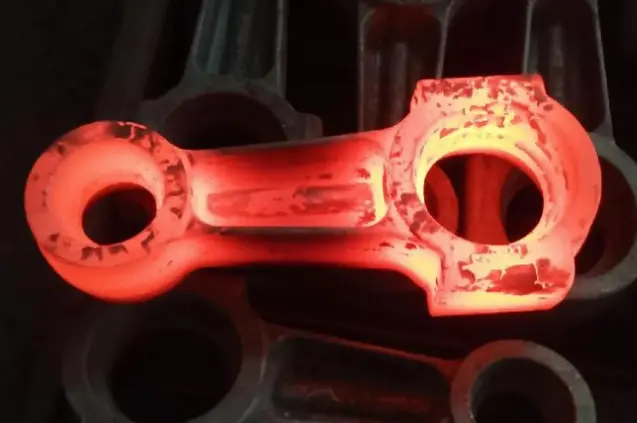
Gesmede komponente vir lugvaart: voldoen aan veiligheidsstandaarde
Production of forged components for aircraft applications is where material consistency, dimensional control, traceability, and repeatable production processes are vital. Aircraft and engine parts are subjected to cyclic loads, vibration, temperature variations, and arduous service conditions, and so the manufacturing route must be considered together with the final part design. Part of the reason is that lugvaart smeedstukken continue to find extensive use for components such as landing-gear elements, engine discs and shafts, structural fittings, and other heavily loaded applications. The forging process can produce a continuous flow pattern of metal that generally follows the shape of the component and can generate desirable mechanical qualities if the material, the deformation schedule, heat treatment, and inspection procedure are appropriately regulated. But the value of a forged component does not derive from only forging. Aerospace consumers also want to be sure that the material was from an approved source, that the manufacturing process met the applicable specification, that needed inspections were performed, and that the finished part is traceable to its production records.
Why Is Forging Important in Aerospace Component Manufacturing?
The manufacturing of aerospace materials and the control of production impose special requirements. One of the requirements may be dimensional stability under repeated stress or defined mechanical qualities at elevated temperatures. Therefore, the right production route is application, alloy, geometry, design requirements, and applicable technical parameters dependent.
How the Forging Process Influences Component Integrity
An aerospace forging normally starts with a regulated billet, bar, or other permitted starting stock. Depending on the alloy and component geometry, the material may be heated and deformed by open-die, closed-die, precision, or other specialized forging methods. The deformation sequence is arranged in such a way that the appropriate shape is obtained and the microstructure and material flow are controlled.
Unlike casting, forging does not involve pouring molten metal into a mold to produce the final shape. Properly managed forging can lessen the probability of some discontinuities associated with casting and can generate a favorable grain-flow pattern. However, forging is not necessarily flaw-free. The die design, heating, deformation, lubrication, cooling, and subsequent heat treatment affect the ultimate condition of the component.
This is why experienced aircraft manufacturers view forging as a controlled process and not merely a forming activity. Process parameters need to be set and monitored against the applicable specification. Inspection is used to verify that the produced component meets prescribed acceptance criteria.
Matching Alloys to the Intended Application
The working environment is intimately related to the choosing of material. Titanium alloys such as Ti-6Al-4V are extensively utilized in applications where high specific strength and corrosion resistance are needed. Aluminum alloys such as 2024 and 7075 can be utilized for applications where low density and acceptable mechanical performance are required. Nickel-based superalloys are employed in high-temperature demanding conditions, especially in some engine applications.
For procurement teams, what matters is that naming an alloy is not enough to define an aeronautical forging. The following may be defined separately: Required material condition Heat treatment of mechanical properties Chemical composition dimensional requirements Inspection criteria: For this reason, buyers should compare providers on the basis of total material and part specification, rather than on the basis of merely a nominal alloy designation.
Aerospace Standards, Approvals, and Traceability
Manufacturing is a safety crucial and requires a written quality system and precise technical standards. Aerospace supply chains are equipped with various standards and approvals for different purposes and are not interchangeable certificates.
Understanding AS9100, AMS, and Customer Specifications
AS9100 is an aerospace quality management system standard used in aviation, space, and defense supply chains. “The 9100 series standardizes quality management requirements for organizations in these sectors,” says the International Aerospace Quality Group.
In contrast, AMS specifications are technical specifications that are widely utilized for aerospace materials and procedures. In some cases, the purchase order and engineering documentation may also reference ASTM standards, customer-specific specifications, drawing requirements, or other pertinent technical documents depending on the component.
When qualifying a forging supplier, this differentiation is important. There is no approval of individual forging designs, materials, or special processes even with an AS9100 certification. An AS9100 certification indicates that an aerospace quality management system exists. The actual part is still to be made and inspected in accordance with the appropriate criteria.
Traceability From Raw Material to Finished Part
Traceability is one of the most critical features of an aerospace forging supply chain under control. The material identification shall be linked to the manufacturing path for production records. Depending on the program, this may comprise heat or lot identification, material certificates, forging records, heat-treatment records, nondestructive testing reports, dimensional inspection data, and final release documents.
This paperwork is especially critical when a client wants to look into a nonconformance or check the manufacture history of a component. A provider that can provide a complete and organized set of documents gives the purchaser much more visibility than one who can simply supply a basic certificate of compliance.
Comparing Forged Components With Other Manufacturing Routes
Forging is not necessarily the answer for every aerospace component. Specific applications may be suitable for casting, machining, additive manufacturing, and fabrication. The selection must be made on the basis of geometry, material behavior, manufacturing volume, mechanical requirements, cost, inspection needs, and qualification limits.
Forging Versus Casting and Machining
In particular, the controlled deformation of forging can lead to a favorable grain-flow pattern and dense material structure for components subjected to high mechanical loading. Casting is advantageous for complex geometries, but cast parts must be carefully controlled for porosity, inclusions, shrinkage, and other casting-related discontinuities.
Machining gives exceptional dimensional accuracy and allows complicated features to be made from a qualified starting material. But in machining, material is removed from the billet material, not by bulk deformation to shape the material. For some of the heavily loaded components, forging followed by machining can give a desirable mix of structural qualities and dimensional accuracy.
The proper comparison is not just to ask which procedure creates the strongest section. Engineers should survey the whole manufacturing chain, including starting material, processing history, heat treatment, machining allowance, and inspection and qualification needs.
Balancing Tooling Cost, Production Volume, and Lead Time
Tooling and engineering expenses might be significant for lugvaart smeedstukken if closed dies or specific equipment are required. The tooling costs are spread out over a larger number of items so that the expenditures may be more economical with increased production volume.
Lead times are likewise widely variable. Delivery may be affected by material availability, die development, forging capacity, heat treatment scheduling, machining needs, inspection queues, and customer approval operations. Purchasers should require suppliers to give a manufacturing schedule that shows the standard production and inspection steps instead of accepting the usual lead-time estimates.
Suppliers with flexible tooling and engineering capabilities can be useful for prototype and low-volume aerospace applications. As one moves into serial manufacturing, the importance of repeatability, capacity planning, process control, and documentation management increases.
Quality Control Throughout the Forging Process
Aerospace forging quality assurance cannot start at final inspection. It should include everything from incoming material to forging, heat treatment, machining, non-destructive testing, dimensional inspection, and final documentation.
Controlling Forging and Heat Treatment Parameters
The temperature at which forging is done, the sequence of deformations, the amount of reduction, the condition of the die, and the way in which the work is cooled affect the microstructure and the mechanical qualities of the product. These factors should consequently be managed in accordance with the approved manufacturing technique and the corresponding specification.
Heat treatment is just as important. The procedure may include solution treatment, aging, annealing, stress release, or other regulated cycles depending upon the alloy. The consistency of the furnace temperature, load configuration, heating rate, hold time, and cooling conditions may need to be monitored and recorded.
Required qualities can then be verified by mechanical testing. The properties that may be defined depend on the material and the part and include tensile strength, yield strength, elongation, hardness, etc. If the applicable specification requires it, a metallographic investigation may provide further information on microstructure.
Using Nondestructive Testing to Verify Component Condition
Nondestructive testing enables manufacturers to evaluate a component without harming it. Ultrasonic testing can discover interior discontinuities. Liquid penetrant testing is most typically used to detect surface-breaking faults. Magnetic particle inspection is applicable to compatible ferromagnetic materials, and eddy current methods provide sensitive detection of surface or near-surface conditions on suitable materials.
Radiographic testing may also be employed if the specification and geometry permit. No single inspection technique can find all probable defects, so the needed NDT sequence should be established by the component specification, material, geometry, and acceptance criteria.
Nadcap is critical when clients seek accreditation for unique aeronautical special processes. According to the Performance Review Institute, the Nadcap program addresses crucial processes, including nondestructive testing and heat treating.
How to Qualify a Supplier of Aerospace Forgings?
Supplier selection should go beyond checking whether a manufacturer claims to produce aerospace components. Buyers need to establish whether the supplier can consistently manufacture the specific component to the required technical and quality requirements.
Reviewing Quality Systems and Special Process Capabilities
An AS9100-certified quality management system can be an important qualification criterion for aerospace supply chains, but buyers should also examine the supplier's actual process capabilities. Depending on the component, this may include forging, heat treatment, nondestructive testing, chemical processing, machining, material testing, and dimensional inspection.
Where customer requirements call for Nadcap accreditation, buyers should verify the relevant accreditation scope rather than assuming that one Nadcap accreditation covers every process performed by the supplier. The accreditation needs to correspond to the process and facility involved in manufacturing the component.
For U.S.-regulated production, the distinction between general quality certification and FAA production approval is particularly important. FAA production approvals include production certificates, parts manufacturer approvals, and technical standard order authorizations, each serving a different regulatory purpose.
Evaluating Manufacturing Records and Engineering Support
A capable supplier should be able to explain how it controls material identification, tooling, process parameters, inspection equipment, nonconforming material, and engineering changes. These controls provide useful evidence of process maturity.
Engineering support is also valuable during development, particularly when selecting appropriate surface treatments for lugvaart smeedstukken. Forging specialists can review draft designs for die access, material flow, machining allowance, draft angles, dimensional tolerances, and potential manufacturing constraints. Early engineering collaboration can prevent avoidable tooling changes after production has already started.
Buyers should also ask how the supplier manages changes after first production. Aerospace programs may require design revisions, updated specifications, process changes, or additional inspection requirements. A controlled change-management system helps ensure that the correct revision reaches production and that obsolete instructions do not remain in circulation.
Documentation That Buyers Should Request
The documentation package can be just as important as the physical forging when a component is intended for aerospace use. The exact requirements depend on the customer and specification, but buyers commonly need evidence covering material identity, manufacturing history, inspection results, and conformity.
Material and Process Records
Material certification should identify the applicable material specification and relevant heat or lot information. Process documentation may cover forging records, heat-treatment charts, furnace information, and other controlled production records.
NDT documentation should identify the inspection method, applicable acceptance criteria, and inspection status. Dimensional inspection records should correspond to the drawing revision and required characteristics.
Final Release and Traceability Records
Before placing an order, buyers should clarify which documents will accompany each shipment and which records will be retained by the supplier. Clear expectations reduce the possibility of discovering documentation gaps after production is complete.
A well-organized documentation system also supports long-term traceability. If a customer later needs to investigate a part, compare production lots, or review the history of a nonconformance, the relevant records should be retrievable without relying on informal communication.
Emerging Developments in Aerospace Forging
The aerospace forging sector continues to evolve as manufacturers seek greater process control, lower material waste, and more efficient qualification routes. However, new technology only provides value when it can be integrated into a controlled production environment.
Near-Net-Shape Forging and Advanced Process Control
Near-net-shape forging can reduce machining requirements by producing a component closer to its final geometry. This can be particularly useful for expensive materials where excessive machining would create significant material waste.
Isothermal and precision forging techniques can also provide tighter control for selected alloys and geometries. These methods may require specialized equipment and process development, so their suitability depends on the component and production volume.
Simulation software is increasingly used to evaluate metal flow, die filling, forming loads, and potential process problems before production tooling is finalized. This can help manufacturers identify design or process issues earlier in the development cycle.
Digital Traceability and Process Monitoring
Digital manufacturing systems can connect production parameters, inspection results, and documentation more effectively than disconnected manual records. Real-time monitoring can help manufacturers identify deviations in temperature, equipment performance, or other critical process variables.
For aerospace customers, the value of digitalization is not simply faster production. Better data management can make it easier to demonstrate process consistency, investigate nonconformances, and retrieve historical records. These benefits are particularly relevant when components have long service lives and require reliable production traceability.
Gevolgtrekking
Ruimtevaart-smeedstukken remain an important manufacturing route for demanding aircraft and engine components because controlled forging can provide favorable material flow, mechanical properties, and structural consistency when the process is properly designed and controlled. Meeting aerospace requirements, however, involves much more than selecting a forging method. Material certification, process control, heat treatment, nondestructive testing, dimensional inspection, traceability, and supplier quality systems all contribute to the final result.
For buyers and engineering teams, the strongest supplier evaluation process is therefore based on documented capability rather than general claims. Reviewing applicable specifications, certification scope, special-process approvals, inspection records, production capacity, and traceability procedures provides a clearer picture of whether a forging supplier can support the requirements of a specific aerospace program.
FAQ
1. What makes aerospace forgings safer than other manufacturing methods?
Lugvaart-smeedstukke is veiliger omdat die greinstruktuur fyner is en daar geen interne foute is nie. Smeedwerk maak 'n deurlopende greinvloei wat die vorm van die onderdeel volg, wat dit meer bestand maak teen moegheid en kraakverspreiding as gegote of gemasjineerde opsies.
2. How do aerospace forging quality standards differ from general industrial applications?
Smeestandaarde in lugvaart benodig strenger materiaalopsporing, beter nie-vernietigende toetse en meer gedetailleerde rekords. Sertifisering soos AS9100- en NADCAP-goedkeurings verseker dat verskaffers aan strenger standaarde vir die vliegtuigbedryf voldoen as dié wat in ander nywerhede gebruik word.
3. What factors should procurement managers consider when selecting aerospace forging suppliers?
Huidige vluglisensies, bewese tegniese vaardighede, materiaalopsporingstelsels en 'n geskiedenis van stiptelike aflewerings is alles belangrike keuringsfaktore. Verskaffers moet toon dat hulle tegniese ondersteuning kan bied en buigsaam genoeg is om aan te pas by veranderinge in die program se aantal en ontwerp.
4. How do lead times for aerospace forgings compare to alternative manufacturing methods?
Afhangende van hoe ingewikkeld hulle is en hoe hulle aangepas moet word, neem lugvaart-smeedstukke gewoonlik 12 tot 24 weke. Alhoewel die wagtyd langer is as sommige opsies, maak die beter gehalte en betroubaarheid dit dikwels die moeite werd as jy na die totale koste en prestasiebehoeftes oor die lewensiklus kyk.
Werk saam met Welong vir u smeevereistes vir lugvaart
Welong was 'n betroubare lugvaart smeedstukken provider for more than 20 years. They have ISO 9001:2015 approval and a track record of making high-quality parts. Our engineering team uses AutoCAD, Pro-Engineering, and SolidWorks to make sure that plans are optimized and that they can be made while still meeting strict aircraft quality standards. We offer full supply chain management services that help OEMs and Tier 1 sellers around the world lower their buying risks and make sure they always get high-quality goods. Get in touch with our team at metaal@welongpost.com om oor u unieke behoeftes te praat en uit te vind hoe ons vliegtuigsmeeddienste u program se sukses kan help.
Verwysings
1. Johnson, Robert A. "Lugvaartmateriaal en vervaardigingsprosesse: veiligheidsstandaarde en gehalteversekering." Tydskrif vir lugvaartingenieurswese, 2023.
2. Martinez, Elena C. "Gevorderde smeetegnieke in moderne lugvaarttoepassings." Internasionale Tydskrif vir Vervaardigingstegnologie, 2022.
3. Thompson, David M. "Voorsieningskettingbestuurstrategieë vir die verkryging van lugvaartkomponente." Lugvaartvervaardigingsoorsig, 2023.
4. Chen, Wei L. "Nie-vernietigende toetsmetodes vir gesmede komponente in die lugvaart: 'n omvattende analise." Materiaaltoetsing Kwartaalliks, 2022.
5. Anderson, Sarah K. "Industrie 4.0-integrasie in lugvaart-smeebedrywighede: Digitale vervaardigingstendense." Vervaardigingstegnologie vandag, 2023.
6. Wilson, Michael J. "Materiaalkeuse en Hittebehandelingsprotokolle vir Veiligheidskritieke Lugvaartkomponente." Lugvaartmateriaalwetenskap, 2022.

Share your inquiry, get the quotation accordingly!
China WELONG - Jou betroubare vennoot in metaaloplossings